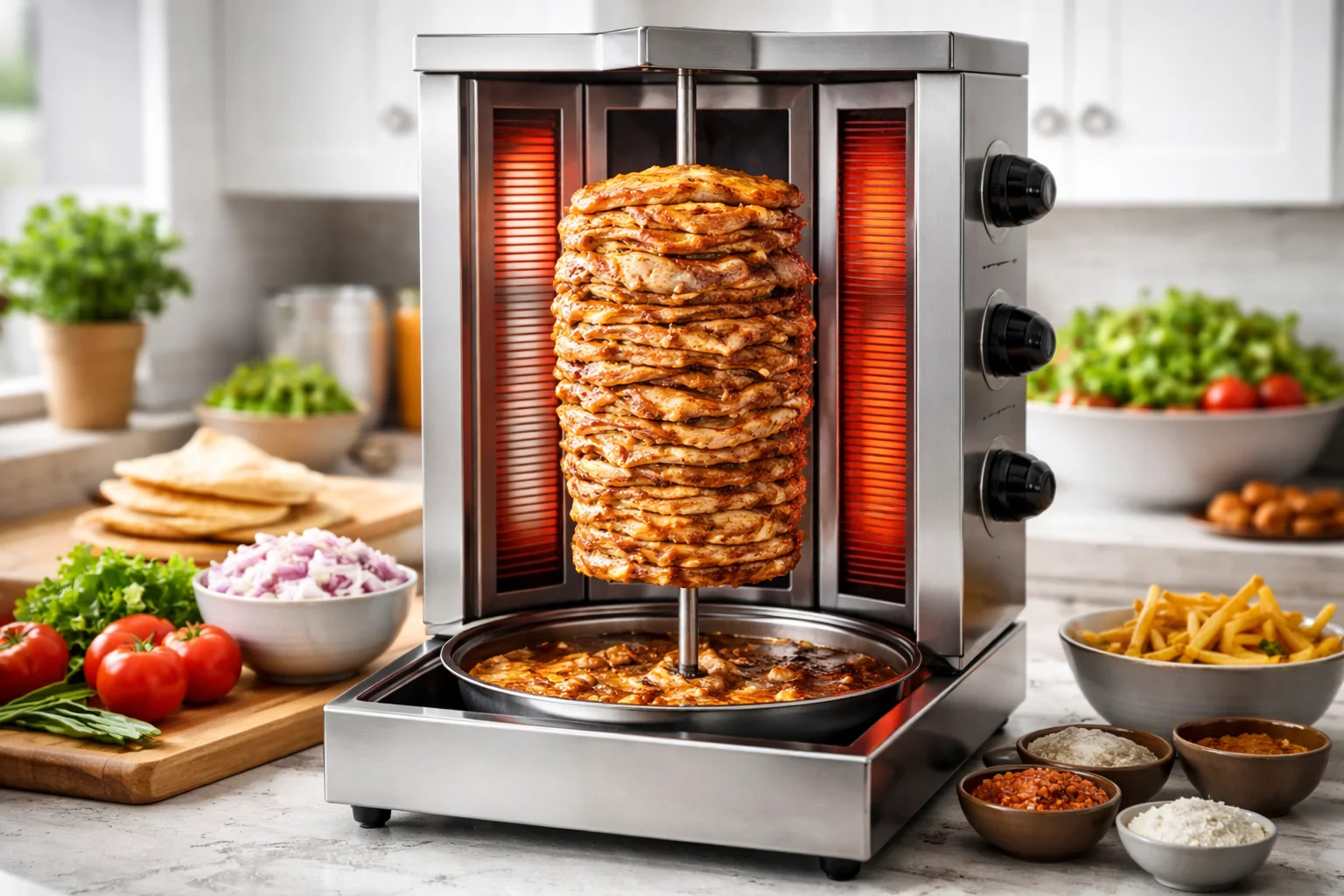
If you love gyros, döner, or shawarma, you’ve probably asked yourself one simple question: Can I make this properly at home, or do I need restaurant equipment? That’s where a gyros grillgerät comes in.
This guide explains exactly what a gyros grillgerät is, how it works, which type you actually need, and what to watch out for before buying. By the end, you’ll know whether a compact home model is enough—or if a more powerful vertical grill makes sense for your situation.
What Is a Gyros Grillgerät and What Is It Used For?
A gyros grillgerät is a vertical rotisserie grill designed to cook layered meat evenly from the side. The meat rotates slowly while heated, creating the crispy outside and juicy inside that gyros is known for.
See also Insoya – A Complete Guide
How a Gyros Grillgerät Works
The meat is stacked on a vertical skewer and positioned next to a heating element. As the skewer turns, the outer layer cooks first. Thin slices are shaved off while the inner layers continue cooking.
This method:
- Preserves moisture inside the meat
- Creates even browning without burning
- Allows continuous serving without overcooking
Why Vertical Grilling Matters for Gyros
Traditional horizontal grilling doesn’t deliver the same texture. Vertical heat lets fat drip away slowly while basting the meat naturally. This is why gyros from a proper grill tastes different than pan-fried versions.
Types of Gyros Grillgeräte Explained
Not all gyros grillgeräte are built for the same purpose. The right choice depends on space, volume, and power source.
Electric Gyros Grillgerät
Electric models are popular for home kitchens and small food setups.
They are:
- Easy to install
- Suitable for indoor use
- Simple to clean and maintain
These grills usually handle smaller meat stacks but still deliver authentic results when used correctly.
Gas-Powered Gyros Grillgerät
Gas grills are common in restaurants and food trucks.
They offer:
- Stronger, adjustable heat
- Faster cooking for large meat stacks
- High output for continuous service
They require proper ventilation and more space, making them less practical for home use.
Compact Home vs. Professional Models
Home models focus on convenience and portion control. Professional grills are built for speed, durability, and long operating hours.
Ask yourself:
- How often will I use it?
- How much meat do I need to cook at once?
- Where will it be placed?
Your answers usually point clearly to one category.
How to Choose the Right Gyros Grillgerät
Choosing the wrong model often leads to uneven cooking, wasted money, or unused equipment.
Capacity and Meat Size
Smaller grills handle 2–5 kg of meat, which is enough for families or small gatherings. Professional models can exceed 20 kg.
Oversizing leads to inefficient cooking. Undersizing limits usefulness.
Heating Power and Temperature Control
Good temperature control prevents dry meat. Look for:
- Adjustable heat zones
- Even heat distribution
- Stable rotation speed
These features matter more than raw wattage numbers.
Materials and Build Quality
Stainless steel construction improves:
- Hygiene
- Heat resistance
- Long-term durability
Cheap coatings wear out quickly under constant heat.
Cleaning and Maintenance
Removable drip trays, detachable skewers, and smooth surfaces make cleaning easier. This is especially important if you use the grill frequently.
What You Can Cook Besides Gyros
A gyros grillgerät is more versatile than many people realize.
Döner, Shawarma, and Kebab Variations
Different marinades and spice blends allow you to prepare:
- Chicken shawarma
- Beef döner
- Lamb gyros
The cooking method stays the same.
Vegetarian and Alternative Options
Many users prepare:
- Seitan stacks
- Marinated vegetables
- Halloumi-style layered alternatives
The vertical heat works well for structured, layered foods.
Common Mistakes When Using a Gyros Grillgerät
Even a good grill won’t help if it’s used incorrectly.
Overloading the Skewer
Packing meat too tightly prevents proper heat penetration. This leads to raw centers and dry outer layers.
Incorrect Meat Preparation
Gyros require thin, evenly layered slices. Thick chunks cook unevenly and ruin texture.
Cutting Too Deep, Too Fast
Shaving off too much meat at once exposes raw layers too early. Thin, gradual cuts maintain quality.
Is a Gyros Grillgerät Worth It for Home Use?
For people who love gyros and cook regularly, the answer is often yes.
Cost vs. Value
A decent home model costs more than a pan, but delivers:
- Consistent results
- Authentic texture
- Long-term usability
If you make gyros only once a year, it’s probably not worth it. If it’s part of your regular meals, it quickly pays off.
Space and Practicality
Modern home models are compact enough for countertops or storage cabinets. Measure your available space before buying.
FAQs About Gyros Grillgerät
Can I use a gyros grillgerät indoors?
Yes, electric models are designed for indoor use. Gas models require proper ventilation.
How long does gyros take to cook?
Initial cooking usually takes 45–90 minutes, depending on meat size and heat level.
Is it hard to clean?
No, especially if the grill has removable parts and a drip tray.
Can beginners use a gyros grillgerät?
Yes. With basic preparation and patience, beginners get good results quickly.
Conclusion
A gyros grillgerät is the key to making real gyros—not just grilled meat with spices. When chosen and used correctly, it delivers consistent flavor, proper texture, and restaurant-style results at home or in professional settings.
Focus on the right size, reliable heat control, and solid construction. With those basics in place, you’ll enjoy authentic gyros whenever you want, without guesswork or disappointment.